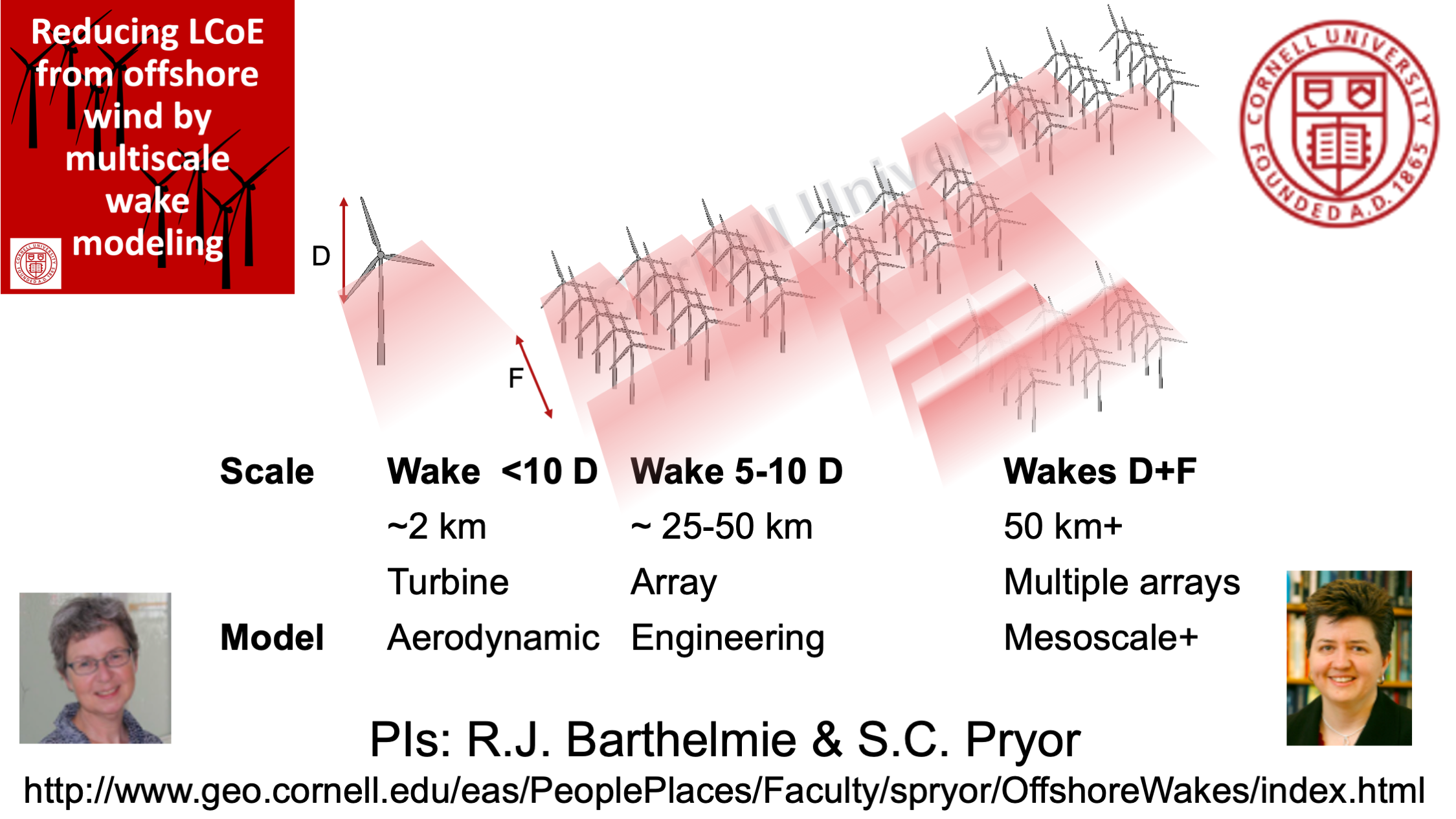
Reducing LCoE from offshore wind by multiscale wake modelingThe research team is led by two faculty members at Cornell: Professor Rebecca J. Barthelmie of the Sibley School of Mechanical and Aerospace Engineering and Professor Sara C. Pryor of Earth and Atmospheric Sciences
|
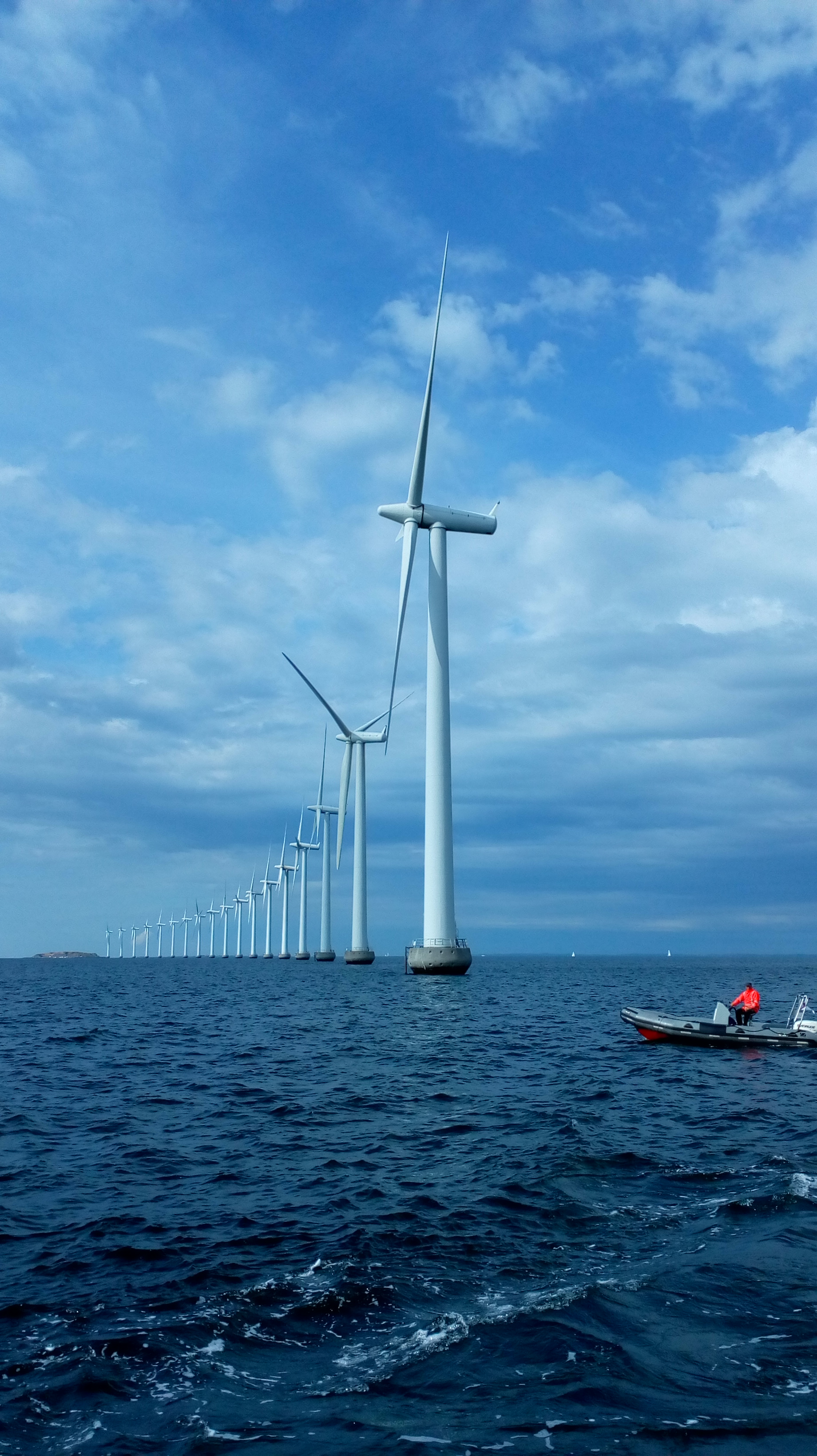
ContentOverviewWind turbines work by extracting momentum from the air and converting that energy into electricity. In doing so they generate wakes in the air behind them - these wakes have lower wind speed and higher turbulence intensity. They dissipate by mixing with and drawing momentum from surrounding air. Thus these wakes 'recover' as they move downstream. Wakes are formed both by individual wind turbines and wind turbine clusters. Ideally no wind turbine or wind farm would operate in the wake of an upstream wind turbine or wind farm, but increasing this spacing increases cost (via cabling) and takes up more space. What we need to do is balance these factors.
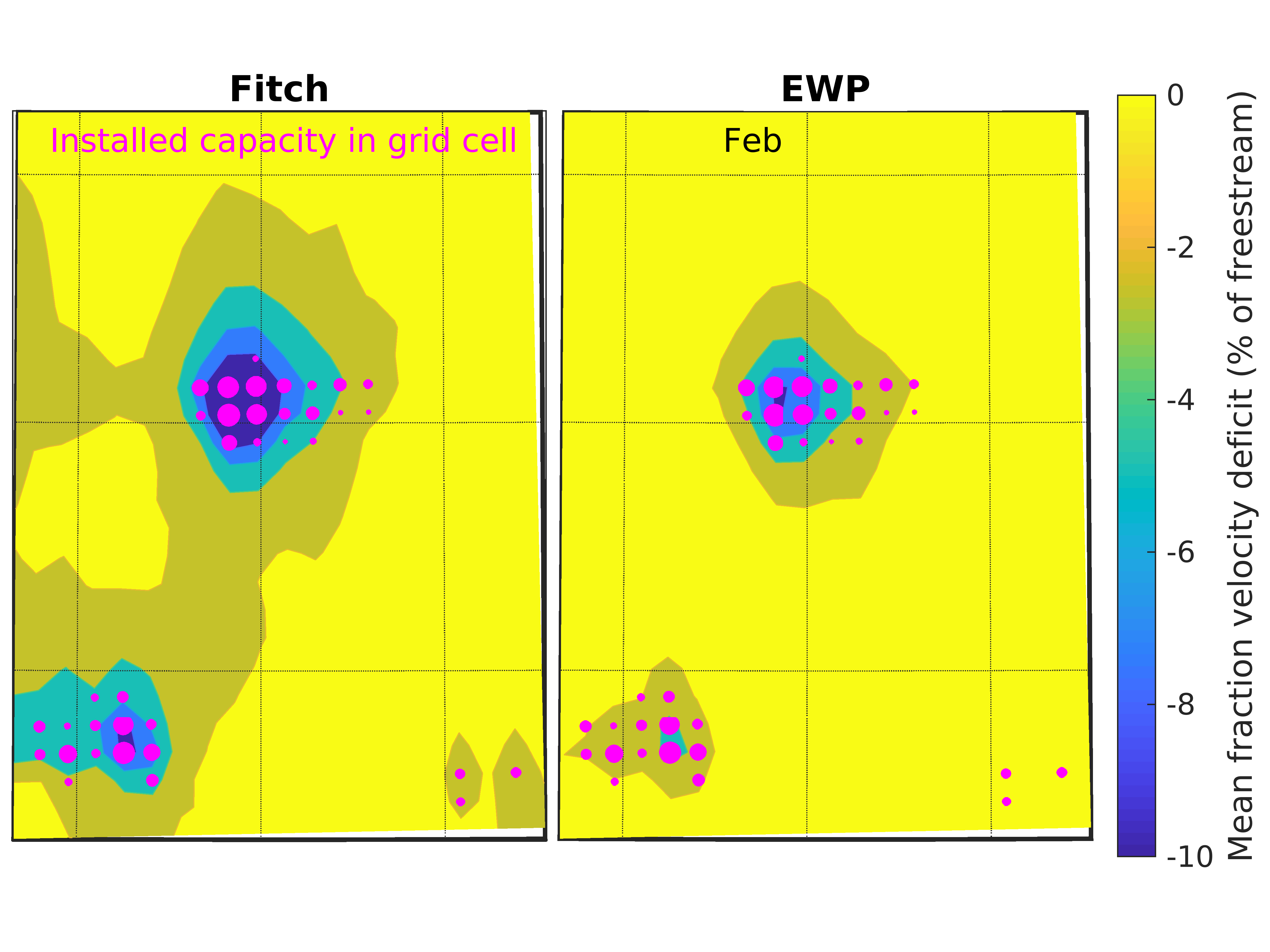
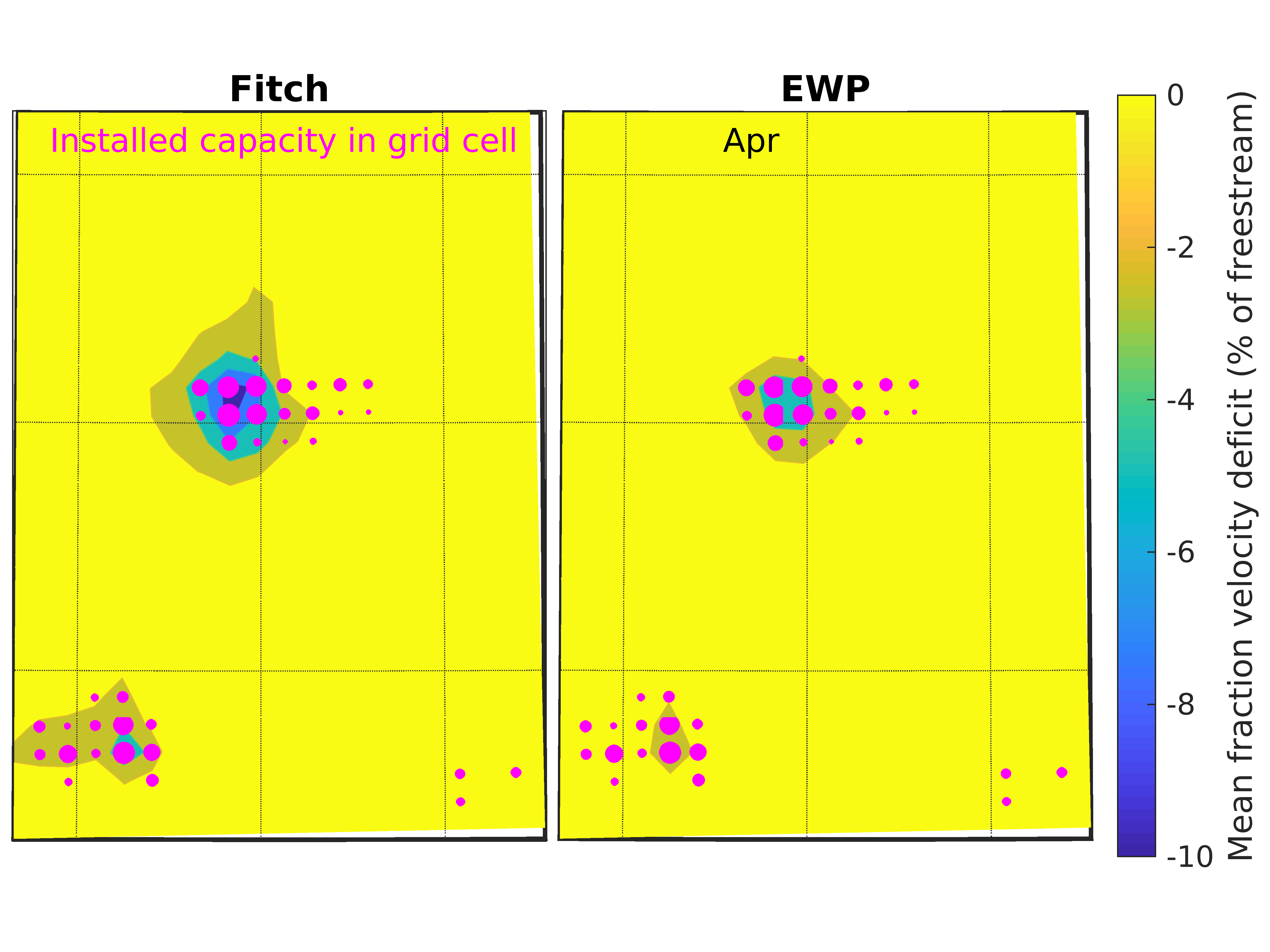
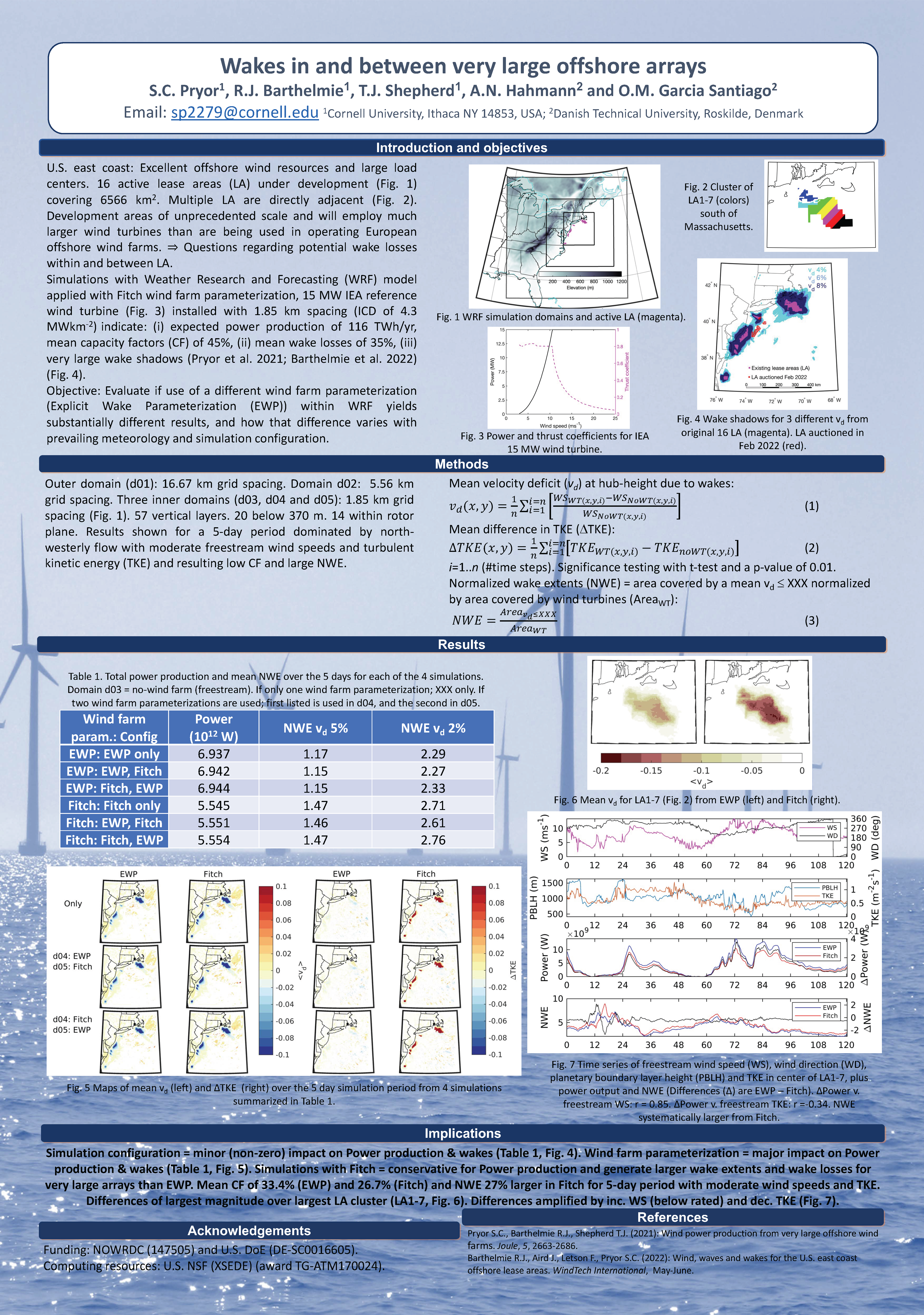
How far do these wakes extend? It depends on the atmospheric conditions - wind speeds, turbulence intensity and stability. As an example the figure on the right shows the spatial extent of wind turbine wakes around a wind turbine cluster in Iowa during two different months (February and April) that have different wind speeds and ambient turbulence intensity. As shown the wakes extend further during the month with low turbulence intensity (February). Because turbulence intensity if typically lower offshore, wind turbine wakes are deeper and more spatially extensive or water surfaces. The figure also shows two different wind farm paramaterizations (Fitch and EWP) exhibit substantially different spatial scales of whole wind farm wakes. Our project is designed to improve understanding of these differences and the physics of wind turbine wakes and contribute to ensuring the expansion of offshore wind energy in the USA is done in a way that maximizes power output and minimizes cost. |
|
Research progress/meetings/Advisory board
The project started on 1 June 2020.
Project meetings
External advisory board
Our external advisory board is; Jasper Kreeft (Shell), Cedric Dall'Ozzo (EDF), Nicolai Gayle Nygaard (Orsted), plus Shannon Davis (DoE).Media coverage
Our project was described in the Cornell Chronicle (13 October 2020) and the Cornell-CALS news website (13 October 2020)
Publications
Presentations
Team
Related readings
 Back to top